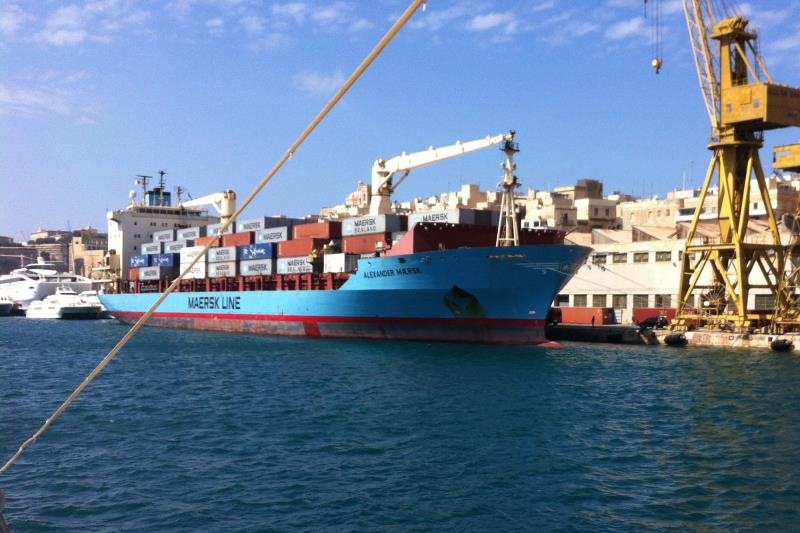

Ship arrest in Tunisia is one of the most effective interim remedies available to maritime creditors. A vessel calling at a Tunisian port may represent the only readily available asset against which a claimant can obtain security before the ship departs the jurisdiction. Because port calls are often short, speed, accurate ownership checks and properly prepared evidence are decisive.
This guide explains the principal rules governing the conservatory arrest and release of ships under Tunisian law. It is intended for shipowners, charterers, P&I Clubs, cargo interests, bunker suppliers, seafarers, port agents and other maritime stakeholders. Each case remains fact-sensitive and should be assessed before an application is filed.
Legal framework for ship arrest in Tunisia
The principal rules are contained in the Tunisian Maritime Commerce Code, enacted by Law No. 62-13 of 24 April 1962, particularly Articles 100 to 106. The Code is supplemented by the Tunisian Code of Civil and Commercial Procedure and, where relevant, by rules governing maritime privileges, mortgages, enforcement and port operations.
Tunisia is not a contracting State to the 1952 Brussels Arrest Convention or the 1999 Geneva Arrest Convention. Consequently, a Tunisian court applies domestic law rather than treating either convention as directly binding. Comparative maritime law may assist legal analysis, but it cannot replace the statutory conditions imposed by Tunisian law.
What is a conservatory arrest?
A conservatory arrest is a provisional measure that immobilises a vessel in order to secure a maritime claim. It does not determine the merits of the dispute and does not, by itself, establish the debtor’s liability. The arrest application and the proceedings on the merits must therefore be distinguished.
The underlying dispute may be governed by foreign law or subject to a foreign court or arbitration agreement. This does not necessarily prevent a Tunisian court from ordering a provisional measure against a vessel located within its territorial jurisdiction. The effect of the jurisdiction or arbitration clause must nevertheless be examined in every case, particularly when fixing the period within which proceedings on the merits must be commenced.
Maritime claims capable of supporting arrest
Article 101 of the Maritime Commerce Code identifies the maritime claims that may support the arrest of a ship. Depending on the facts and the supporting documents, these may include claims connected with:
- ownership, co-ownership, possession or operation of a vessel;
- damage caused by a vessel, collision and other maritime casualties;
- loss of or damage to cargo and disputes arising from carriage by sea;
- charterparties, bills of lading and other contracts for the use or hire of a ship;
- salvage, towage and pilotage;
- supplies, bunkers, materials, equipment and services furnished to a vessel;
- construction, repair, maintenance and port or dock charges;
- wages and other claims of the master, officers and crew;
- general average, maritime mortgages and other qualifying maritime security interests.
Classification as a maritime claim permits an application for arrest only when the remaining statutory and procedural conditions are satisfied. It does not automatically establish that the claim is due, that the shipowner is personally liable, or that any vessel associated with the commercial operation may be arrested.
Which vessel may be arrested?
The ship against which the claim arose is the primary target of a conservatory arrest. Arrest of another vessel—often called a sister ship—requires careful proof of the ownership conditions laid down by Tunisian law. Common management, a shared operator, group affiliation, similar commercial branding or chartering arrangements do not, by themselves, establish common ownership.
The identity of the registered owner, the debtor, the bareboat or time charterer and the party that ordered the relevant goods or services must be verified before filing. The legal relationship between the claim and the vessel is especially important where the debt was incurred by a charterer rather than the registered owner. A statement that every debt of an operator or charterer automatically follows the vessel would be unsafe under Tunisian law.
Commercially operated State-owned vessels may be treated differently from warships and vessels used exclusively for sovereign, non-commercial purposes. Any immunity issue requires a separate analysis of the vessel’s ownership, use and the applicable rules of public international law.
Competent court and urgency
The arrest application is normally presented to the competent court in whose territorial jurisdiction the vessel is located. The correct court therefore depends on the ship’s actual port or anchorage at the time of filing. A vessel at La Goulette, Rades, Bizerte, Sfax, Sousse, Gabès or Zarzis must not be treated as if all Tunisian ports fell within one territorial jurisdiction.
Applications are generally made on an urgent and ex parte basis because advance notice could allow the vessel to sail. The court examines the documents submitted by the claimant and may require security from a foreign claimant who has no domicile or attachable assets in Tunisia, subject to Article 104 of the Maritime Commerce Code and any applicable bilateral treaty granting equal access to justice.
Documents required for an arrest application
A well-prepared application commonly includes:
- the contract, charterparty, bill of lading, invoice, statement of account or other instrument creating the claim;
- correspondence, notices, acknowledgements and evidence that the debt is due;
- current evidence of the vessel’s identity, IMO number, flag, location and registered ownership;
- evidence linking the debtor and the target vessel where ownership or chartering structures are disputed;
- the power of attorney and corporate documents establishing the claimant’s legal capacity;
- Arabic translations of foreign-language documents, with originals or duly authenticated copies where required;
- a calculation separating principal, contractual interest and recoverable costs.
Electronic vessel-tracking information can help establish urgency and location, but it should be supported by reliable port or agency information whenever possible. Defects in the debtor’s name, vessel identity, amount or territorial jurisdiction can delay the order or expose the arrest to challenge.
Execution of the arrest order
Once granted, the order must be executed promptly through the competent enforcement officer and notified to the relevant maritime and port authorities in accordance with Tunisian procedure. Obtaining an order on paper is not enough: the operational notifications that prevent clearance and departure must be completed before the vessel sails.
At the same time, the claimant must preserve the time limit applicable to the substantive claim. Arrest is a security measure; it is not a substitute for commencing proceedings before the competent Tunisian or foreign court or arbitral tribunal.
Release of an arrested ship
A ship may be released following settlement, withdrawal or cancellation of the arrest order, a successful challenge to its legal basis, or the provision of adequate security. The court considers whether the proposed security sufficiently covers the principal claim, interest and reasonably foreseeable recoverable costs without becoming punitive.
In Tunisian practice, the safest forms of security are generally a guarantee issued by an acceptable Tunisian bank or a deposit made with the Tunisian General Treasury for the benefit of the claimant. A foreign bank guarantee, P&I Club letter of undertaking or private undertaking is not automatically binding on the court. It may be accepted when the claimant agrees or when the court considers the proposed arrangement legally sufficient, but acceptance should never be assumed.
Providing security should normally be stated to be without admission of liability and without prejudice to jurisdiction, limitation, applicable law or the merits. The wording, amount, duration, enforcement trigger and release conditions require careful negotiation. Once sufficient security has been provided for a claim, a second arrest for the same claim is generally restricted, subject to exceptional circumstances such as failure or inadequacy of the security.
Challenging an arrest and wrongful arrest
The owner or other interested party may seek urgent release where the claim is not maritime, the applicant has arrested the wrong vessel, ownership requirements are not met, territorial jurisdiction is lacking, the debt is extinguished or prescribed, required proceedings were not commenced, or adequate security has already been furnished.
Damages for wrongful arrest are not automatic merely because an order is later lifted. The claimant’s lack of a valid legal basis, fault, abuse, bad faith or serious procedural misconduct, together with causation and proven loss, must be assessed under the applicable Tunisian rules.
Arrest in execution is different
Conservatory arrest should not be confused with enforcement arrest and judicial sale. A creditor holding an enforceable judgment or arbitral award may follow a different procedure designed to execute against and, where legally justified, sell the vessel. Recognition and enforcement of a foreign arbitral award must be obtained where required before compulsory execution. See our guide on recognition and enforcement of foreign arbitral awards in Tunisia.
Practical checklist before filing
- Confirm the vessel’s live location and expected sailing time.
- Identify the registered owner and the exact contractual debtor.
- Verify that the claim falls within Article 101.
- Check sister-ship ownership and immunity issues where relevant.
- Determine the territorially competent Tunisian court.
- Prepare originals, corporate authority and Arabic translations.
- Calculate principal, interest and costs accurately.
- Examine prescription and the forum for proceedings on the merits.
- Plan execution of the order and notification to port authorities.
- Prepare a release-security strategy before negotiations begin.
Maritime counsel in Tunisia
Ship arrest in Tunisia is a fast and highly technical remedy. The strength of the claim is important, but timing, ownership evidence, jurisdiction, translations and execution formalities often determine whether the vessel is effectively detained. Dr. Brahim Latrech represents shipowners, charterers, P&I Clubs, cargo interests and maritime creditors in urgent arrest and release proceedings before Tunisian courts and ports.
For urgent assistance, provide the vessel’s name and IMO number, current port, expected departure time, identity of the debtor, amount and currency of the claim, and the principal supporting documents.